
Can You Teach Your Child English If You Don’t Speak It? 5 AI-Powered Strategies for Parents
In our fast-moving, globalized world, English has evolved from a simple ‘extra skill’ into an absolute life necessity. One of the most common questions I hear from anxious parents is: ‘How can I learn English with AI for kids if I don’t speak the language well myself?’ If you’ve felt this way, take a deep breath. In the modern digital era, your role as a parent has shifted. You don’t need to be the primary ‘source’ of knowledge anymore; instead, you are the inspiring facilitator of the journey. With the right tools, you can guide your child toward fluency while learning right alongside them.
If you have ever felt this hesitation, you are not alone. But here is the good news: Technology, specifically Artificial Intelligence (AI), has completely bridged this gap. Today, your role as a parent isn’t to be the “source” of knowledge, but the facilitator of the journey.
Drawing from educational insights and the latest digital tools, here is how you can raise a bilingual child using AI, even if your own English is limited to “Hello” and “Goodbye.”
1. Turn ChatGPT into a Patient Live-In Tutor
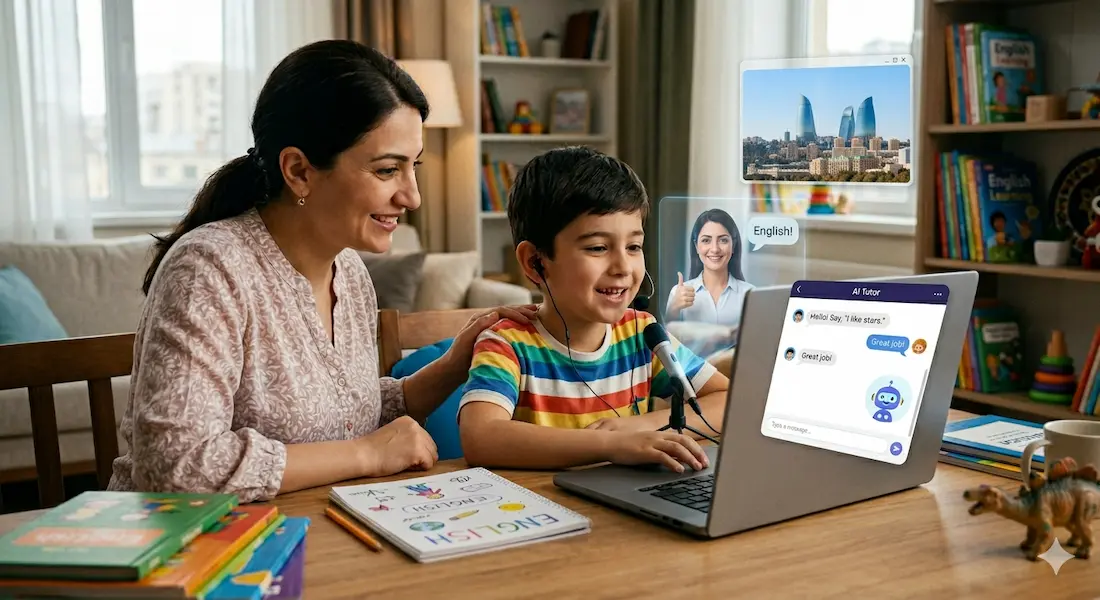
The biggest challenge for non-English speaking parents is answering a child’s spontaneous questions. AI models like ChatGPT or Claude can act as a 24/7 tutor that never gets tired or frustrated.
- The Strategy: Use the voice conversation feature on the ChatGPT mobile app. You can simply prompt the AI in your native language: “Please speak with my child in simple English about their favorite cartoons. Correct their mistakes gently and encourage them.”
- Why it works: It removes the pressure from you. The AI adjusts its vocabulary to the child’s level, providing a safe space for them to practice speaking without fear of judgment.
2. Co-Create Personalized “Story Worlds”
Children learn best when they are emotionally invested. Instead of generic textbooks, use AI to make your child the hero of their own learning material.
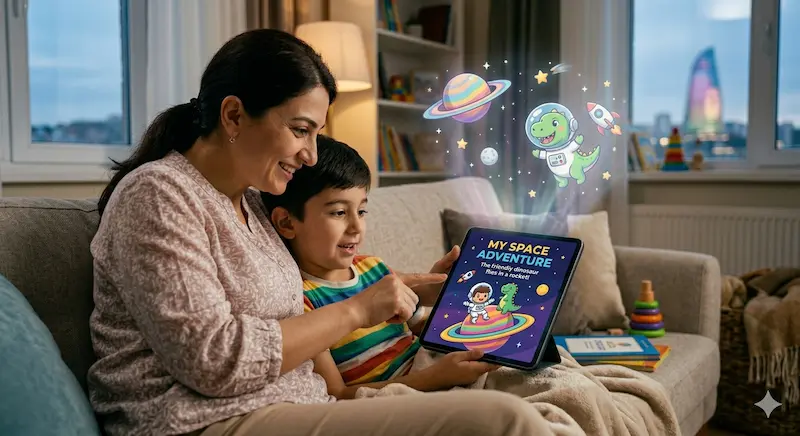
- The Strategy: Ask an AI: “Write a 5-minute bedtime story in simple English about my son/daughter going on a space mission. Include 5 new words about planets.”
- The Pro Tip: You can use AI translation tools to understand the plot yourself, then discuss the story with your child in your native language. This reinforces the concepts and shows them that you are interested in their progress.
3. Mastering Pronunciation Without the “Parent Accent”
Many parents worry about passing on a thick accent or incorrect pronunciation. AI-driven apps like ELSA Speak or Duolingo use advanced speech recognition to solve this.
- The Strategy: Let the app handle the “grading.” These programs analyze the child’s voice and provide visual feedback—showing green for correct and red for incorrect sounds.
- Your Role: You don’t need to know the correct phonics. Your job is simply to celebrate when the screen turns green. This gamification keeps the child motivated while ensuring they learn native-like pronunciation.
4. Transform Passive Screen Time into Active Learning
We all know kids love YouTube. However, passive watching rarely leads to fluency. You can use AI browser extensions like Language Reactor to change the game.
- The Strategy: When your child watches an English cartoon on a laptop, these tools show dual subtitles (English and your native language) simultaneously.
- The AI Edge: If the child doesn’t recognize a word, they can hover over it to hear the pronunciation and see a visual dictionary. It turns entertainment into an interactive classroom where the parent’s intervention isn’t required for translation.
5. The “Reverse Mentorship” Method
This is a psychological secret that works wonders for retention. Children love feeling more capable than adults.
- The Strategy: Set a “Daily Challenge” where your child has to teach you three new English words they learned from the AI that day.
- The Benefit: To teach something, the child must first master it. This builds immense confidence and shifts the dynamic from “I’m being forced to study” to “I am the expert in the house.”
Leave a Reply